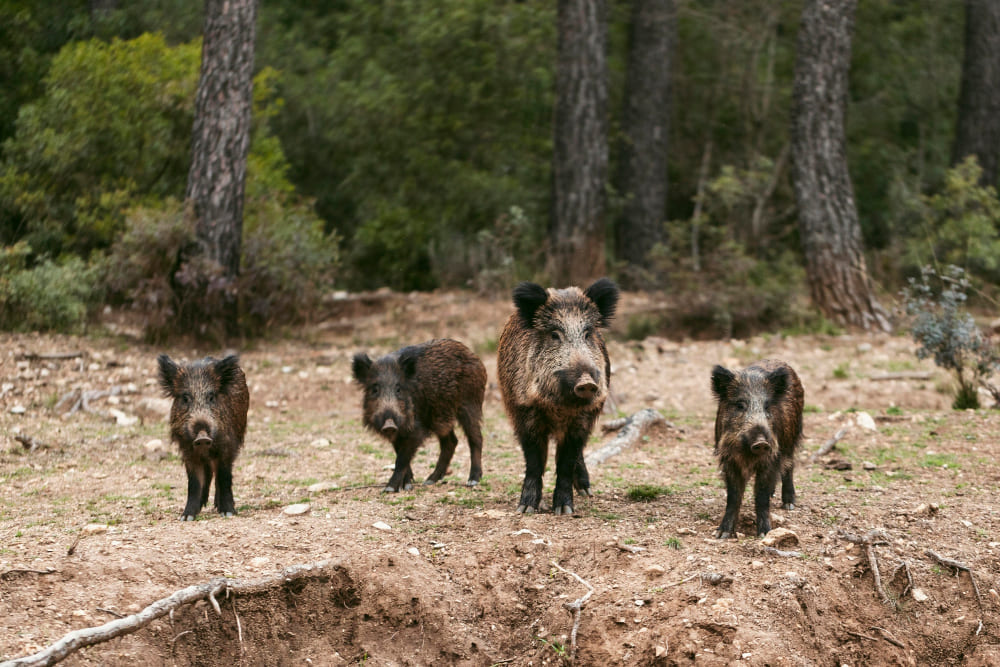
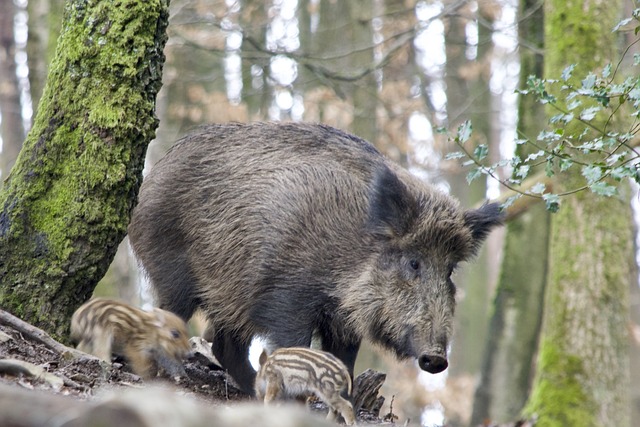
HUNTING DEER OR HOGS? The main problem seems to be the majority of hunters are applying deer hunting skills and tactics to hog hunting. It's true that many of those skills will get you a long way and are needed to locate fresh sign and determine the presence of hogs. But at some point those skills must give way to new ones. Skills that are adapted to the ways and life styles of wild hogs and not deer. Now, all of my experience comes from the Piney Woods and Hardwood bottomland of Texas. For years I have successfully hunted, trapped, bred and raised wild hogs. I started out just like many hunters do. Seeing lots of fresh hog sign while hunting for deer and rarely finding the hogs or just always being one step behind. Over the years I have found that there are reasons for this. The main reasons are the differences in lifestyles between the white tail deer, which most hunters have adapted their skills to, and wild hogs. Another big difference between hunting deer and hogs that should be considered is that here in Texas and many other states hogs are considered to be nothing more than nuisance animals. Because of that fact the rules and regulations are very lenient. This allows more freedom and time for the pursuit of the wild hog. They can be hunted 365 days a year and 24 hours a day with most any weapon or trap. Even with that leniency their numbers are still increasing rapidly. Deer on the other hand are highly regulated game animals in every state, whose population must be guarded and well managed to sustain their numbers. This strongly reflects the difference in the animals. The difference in lifestyle between deer and hogs really creates a large gap between the animals. Deer, as we all know breed once a year and will have one fawn and sometimes twins. Wild Sow will have two litters a year with most litters consisting of three to five piglets with the most common number of a litter being four. Her offspring will most likely be bred at or before six months of age, again having three or four piglets.
Wild hogs have no home territory. This is the biggest difference and one of the main reasons hunters fail to consistently take wild hogs. It is well known and documented that deer have a 'Home Range'. This Home is often described or limited to one or two square miles and deer won't stray far from home even under heavy hunting pressure. Wild hogs on the other hand, may go for miles and never return to an area even under the slightest hunting pressure. It would be wise to remember this fact if hogs have just entered or rarely enter your hunting area and a hunter wants to shoot one. If hunter plays his cards the wrong way and scares them it may be a long time before any more return. With this detail in mind a hog hunter should take care not to intrude on hogs and their hiding places. It's true the same care and precaution should be taken for deer also. But look at the difference. If you scare a white tail deer from it's resting place that deer will limit the distance it retreats and stay in it's home range. With hogs, forget it. If hogs are jumped from their hiding place they will most likely not stop their retreat anywhere near the same area. Then the hunter has lost his opportunity to take one of them. SIGNS AND PATTERNS So what should a hunter do to successfully find and take these hard to hunt hogs? First of all it's fair to assume that the population of wild hogs in a given hunting area will strongly determine the success of a hunter. In areas with high population or overpopulation it will be easier to successfully hunt wild hogs. In most any situation hunters can improve their odds on taking a hog by following some simple guidelines. In many cases the first signs of wild hogs are noticed in open fields where they have begun rooting up the ground. Rooting is one of the most highly prevalent sign hogs can make. They're easy to spot and keep track of.
The first mistake hunters will make after noticing rooting is to go in the woods and search for the hog's hide out. That is the last thing a hunter should do. The first thing that should be done is to study the sign and determine how fresh the sign is and for how long, or how many days the hogs have been rooting in one area. This is important information, because wild hogs are creatures of habit. The one thing that hunters can and should try to take advantage of is the hog's repetitive behavior or patterns, which is a weakness. A hunter should look for trails leading into the rooted pastures. Hogs will often use the same trail over and over again making a clean path under a fence and into the fields or pastures. They will often root in the same areas for days and weeks at a time. By studying and identifying these sign a skilled hunter should be able to determine whether or not the hogs have established a consistent pattern. The use of trail cameras can greatly aid in gathering information and discovering patterns also.
It's not necessary to establish a complete pattern from the bedding area to the rooting area. All that is needed is one firm piece of the pattern, such as the rooting in fields. Once that pattern is established a hunter can begin developing a method or strategy to hunt the hogs, which will be discussed later. BAITING HOGS A hunter can also change and alter the patterns of hogs to suit his needs. In fact deer hunters shoot many hogs, over corn feeders. There are many reasons why corn feeders are an asset to hunting hogs. The main reason is that they can alter and strengthen hog patterns and bring the hogs to hunters instead of the hunters having to find the hogs. This goes back to the basic principal, mentioned earlier, of not going in to find the hogs because it runs them off and they may not return. That's a big mistake when it comes to hog hunting.
Again, the idea way to a successful hog hunt is to take advantage of the hog's weaknesses. The most popular way to do this is with bait. In some states this may not be legal, to some hunters it may not be ethical, but none the less it is a highly successful strategy. By routinely baiting one or more spots, whether with automated feeders or other devices, hogs can be lured into a routine or pattern that can help make any hunter successful. With care and proper hunting techniques it can bring in hogs and in many cases it can hold hogs on the hunters property. CHOOSING A BAIT Many things should be taken into account before choosing a bait. The bait is always a big topic for debate. Some experienced hunters are completely convinced that sour corn is the best and no other can compare. Others have home brews that may contain beer or grape or raspberry Jell-O and the lists go on. This section is not to debate home brews, it's to provide information on how to bring in and hold hogs so hunters can shoot them. There are lots of things to consider when choosing bait or a combination of baits. One of those considerations should be the coons. It does no good to put out 20 pounds of corn for the hogs when the coons will scarf it up before the hogs ever find it. Another one is using bait to cover a hunters scent, and another one is that the corn should remain crunchy so it will make noise when the hogs are feeding. Noise covers the hunters noises, alerts other hogs to a feeding frenzy and on those dark moonless nights it alerts hunters to the presence of hogs on the bait. With these reasons in mind I strongly recommend corn mixed with diesel or corn and milo mixed with diesel. Diesel will deter coons, it has a powerful aroma and the corn will stay crunchy. To prepare bait a hunter simply applies one quart of diesel to 5 gallons of corn. There is no need to let the mixture soak and more diesel can be used if desired. BAITING DEVICES There are lots of ways to bait for hogs. One common way is to dig a hole one or two feet deep and one or two feet across. Place some bait in the bottom and cover it with a layer of dirt. Place some more bait in the hole and cover it with a layer of dirt. Proceed till the hole is full then be sure to place some bait on top. The hogs will work long and hard to dig the corn up and will return time after time till the corn is gone and they loose hope of getting any more. As long as the hole is continually baited the hogs should return.
I recommend buying ADS pipe in 10 foot pieces, with no holes in it. You'll find it's easy to cut some ¾ inch holes with just a pocketknife. I recommend one hole every two or three feet. One end can be smashed together and wired closed. The other end is tied about three feet up a "T"Post and left open so corn can be poured into the pipe. This pipe is very inexpensive, it costs around 3.75 for a 10-foot piece.
PLACING YOUR FEEDING DEVICES OR BAIT Once a hunter has chosen bait and the devices to hold the bait it's then time to choose the spots where the bait will be placed. These spots should be easy to get to. They should be placed in an area that will fit the hunting method to be used. They should be located far enough away from any bedding areas so that the hogs can not hear, see or smell a hunter as they arrive to start their hunt. The baited spots are best located directly next to trails, wallows and other frequently used areas. The location is extremely important in all those regards, especially where there are fewer hogs around. Despite what many hunters believe hogs really aren't some kind of mobile four-legged corn detectors. Home brews of no kind will make hogs magically go where they haven't gone before. In order for the bait to be found quickly it must be placed so that the hogs will most likely walk right into it. Sometimes it helps to trickle a trail of corn leading to the baiting device. STRATEGY FOR HUNTING HOG PATTERNS Prehunt preparations can make a hunting spot better or it can ruin a hunt, it all depends on what the hunter's intentions are. There are several kinds of hunts a hunter will be preparing for. Long Term Hunting, Short Term Hunting and Quick Hunts are all types of hunting conditions that hunters may be faced with. Preparing for each one will be vastly different. The preparation for Long Term Hunting would involve lots of activities such as sawing limbs or small trees and cutting grass with a weed eater and other intrusive methods.
When a hunter is restricted to Short Term Hunting, such as a month or two months as some public land is now governed, it would be wise to consider other less intrusive measures of preparation. This would also be true for those Quick Hunts of just one or two days. In this situation, a hunter should be scouting for fresh hog sign and trying to establish a pattern that already exists, without scaring the hogs that are in that pattern.
The hunter should be prepared with some kind of light stand that can be carried into the area and set up quietly and with very little effort. The preparation could take more than two or three days with the hunter being very cautious too never jump the hogs or leave intrusive odors or damage. The baiting would continue and should lead to taking a hog either day or night. If night hunting is not allowed the hunter would have to study the sign and figure which direction the hogs are coming from. If it becomes obvious that the hogs will not come out in the daylight hours of morning or evening, then the operation would need to be moved ever closer to where the hogs are coming from, careful to never jump or scare the hogs. It would also be wise for the hunter to stay clear of the area during the middle of the day. He could search more areas to establish patterns from other groups of hogs and start working more and more spots. A portable climbing stand comes in handy in these situations. The hunter should remain patient be confident that he is afforded some time to have a successful hunt. A hunter who has only a day or two is at a real disadvantage.
If the hunter is dayhunting only, he will have to judge the area and the sign, and decide whether to go further toward the hogs or not. Too far and he risks jumping them. Where should he be prepared to shoot or stop? The guiding factor for me is always the location. To make it simple for daytime hunting, you will always need to be near some kind of dense cover. If there were no type of dense cover, then I would track the hogs until I did reach some kind of noticeable dense cover. At that point I would stop and set up and wait, or go on in after them. Equal parts of luck and skill will determine the success of these short hunts.
NIGHT TIME HUNTING Heading out to the stand for a long hunt at night will require some thought too. There are methods and things to know that can make the hunt easier and more successful. Remember to bring some extra corn with you. This corn should be spread out, not piled, in any visible areas from your stand. This can really help because when hogs get up and start moving at night it's usually at a steady fast walk. Keep in mind that not every hog walking by the stand knows about the baited area that has been attracting other hogs. They may simply speed right on by and be gone before you know they were there. So if the extra corn is scattered in all directions that are visible from the stand, and a hog wanders into the area, they will stop to eat the corn. This should allow for a good clean shot. On dark nights it's important that you hunt with your ears because you can't see with your eyes. Those feeding devices that create lots of noise will now be ready to pay off. You can also listen for the hogs crunching the corn. Hogs are very loud smackers. Along with smacking they make lots of noise sniffing out the corn that is scattered on the ground (not in piles). With the smacking, crunching and loud sniffing going on the hunter can get ready to switch on the light. This is a critical point in the hunt.
There are a lot of different models to choose from but the basics of this strategy are simple. The lights come on at dark and stay on! The hogs walk in to the baited area and the hunter can see them! No flicking a switch, no bright light popping on off and above all no more of the nagging question "is a hog there or not,, is it time to turn on the light"? All you have to do is sit in the stand and watch, when the hogs come in you can see them, and have the needed light to aim and shoot with no fumbling around for flashlights, switches, and other distractions that could scare the hogs. Artificial light is not the only light a hunter can use. Moonlight from a Full Moon or nearly Full Moon is more than bright enough to hunt and shoot with. The proper equipment is needed such as 10 x 50 binoculars, which can make seeing much easier by drawing and concentrating light. The same with riflescopes is true. I would recommend one that can be set on a power of 4 - 6 with an objective lens of at least 30-MM. The bigger the objective lens, the more light the scope can draw in. So a variable scope with a large objective lens such as a 3x-9x 40 MM is ideal. A 50MM objective is better yet. Using the binoculars and scope while hunting an open pasture at night can make shooting hogs a simple and exciting adventure.
|
